
CNC Bronze Alloys
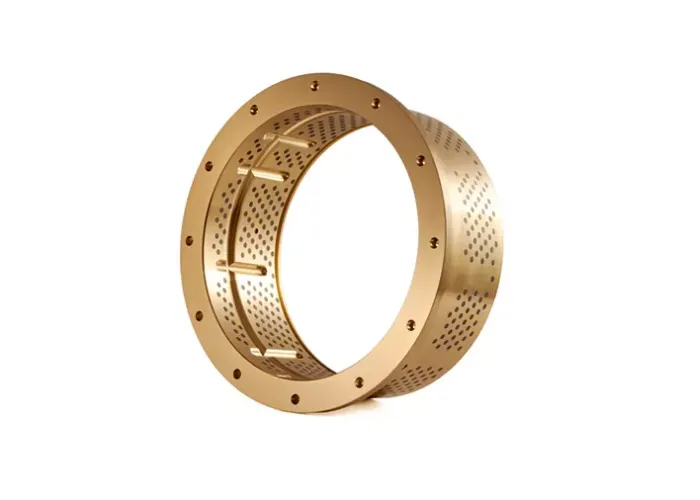
CNC Bronze Alloys are a class of alloy materials containing copper base, usually composed of copper (Cu) with elements such as tin (Sn), aluminum (Al), phosphorus (P), silicon (Si) or manganese (Mn). These alloys have good mechanical properties, wear resistance, corrosion resistance and excellent machinability, and are widely used in industrial manufacturing.
Wear Resistance
Corrosion Resistance
Excellent Machinability
Lead Time
5~7 days
Density
8.7-8.9 g/cm³
Typical Tolerance
±0.1 mm
Max Size
3600 x 2500 x 600 mm
Material Profile
Why Bronze Alloys Make Sense for CNC Machining
Excellent wear resistance
Bronze alloys offer low friction and strong wear resistance, making them ideal for bushings, bearings, gears, and sliding components.
Good corrosion resistance
Bronze performs well in seawater, humid environments, and outdoor applications, especially compared with many plain steels.
High strength and toughness
Many bronze grades provide good mechanical strength and impact resistance for heavy-duty mechanical parts.
Good machinability
Bronze alloys are suitable for CNC machining of precision parts that require stable dimensions and smooth bearing surfaces.
Performance Snapshot
Material Characteristics at a Glance
Relative performance profile across key engineering parameters. Values are contextual — not absolute stress ratings.
Detail
MediumSource score: 3/5
Strength
ExcellentSource score: 5/5
Flexibility
LowSource score: 2/5
Benefits
- Excellent Machinability
- High Corrosion Resistance
- High Strength and Durability
- Aesthetic Appeal and Anti-Microbial Properties
Limitations
- High Material Cost
- Bronze is denser and heavier than aluminum and many steels.
- Limited Strength Compared to Some Metals
Technical Specifications
CNC Bronze Alloys Family Data
Material Properties
Machining Rules
Available Finishes
Finishes That Make Sense For Bronze Alloys
Polishing
Smooths and brightens bronze surfaces to improve appearance and reduce surface roughness.
Nickel Plating
Applies a protective nickel layer to improve corrosion resistance, wear resistance, and surface hardness.
Patina Finish
Creates a controlled aged or decorative surface color while helping protect the bronze surface.
Bead Blasting
Creates a consistent matte surface texture and helps hide minor machining lines on bronze parts.
Compare & Decide
Pick A Different CNC Family
Better Machinability
CNC Brass Alloys
CNC Brass Alloys are metal materials with copper (Cu) and zinc (Zn) as the main components, commonly used for CNC machining. Depending on the alloy composition, brass can provide good mechanical properties, corrosion resistance, and excellent electrical and thermal conductivity.
Electrical Conductivity
CNC Copper Alloys
CNC Copper Alloys are a class of high-performance metal materials with excellent electrical conductivity, thermal conductivity, corrosion resistance, and good machinability. With their excellent physical and chemical properties, they play a key role in modern industrial production and are an ideal choice for high-precision, durable, and reliable parts.
Next Step
Ready To Machine Bronze Alloys Parts?
Upload CAD and include a 2D drawing for tolerance-critical features, threads, finish requirements and inspection notes.

Unionfab is China's Largest 3D Printing Manufacturing Company for Rapid Prototyping and On-Demand Production Parts.
沪ICP备17023219号-3Region: -, Version: 26.09.2401
